Relevance to Directing:
- How important theory is to effective practice: learning lighting theory made me incredibly aware of how precise each choice made by a professional director has to be to communicate their desired effect and achieve their creative vision.
- Reflecting-in-action: by reflecting whilst on set, i was able to see ways i could improve the lighting to enhance the visuals and creepy atmosphere of the final film. This taught me how constantly reflecting and adapting the approach on set is an integral skill that the best directors possess.
- Reflecting-on-action (wrote a group reflective report): This has taught me how my dedication to lighting design has prepared me to train in the directing specialism. My experience on this film allowed me to see the skills needed to be a director, which has invigorated me to pursue a degree studying and practicing the craft at Master's level.
- Directing vocals for the voiceover: by providing different prompts and praise that created a supportive space to make mistakes, i helped create an environment for the first-time voice actor to feel comfortable in her role.
- Constructive communication: The significance of communication amongst a team was perhaps the most important thing i learnt on set. The project came together, only strengthening the initial vision, through a consistent and constructive team effort from all involved. I believe my understanding of a constructive and healthy team, and my knowledge of how important every individual is to the final film, will make me well equipped to becoming a proactive, understanding and creatively-driven director. I believe that successful collaboration only enhances a film to heights it never could have reached with a director working alone.
- Working on a set: I learnt about working on a set and how the director interacts with every role to ensure their vision is reached whilst allowing creative freedoms of each practitioner to strengthen the final film overall.
Learnt about the production process from start to finish, developing a concept in a collective brainstorming session before moving into pre-production, production and post-production.
My role as Lighting Designer...
Pre-production (3 days)
1. Learning theory: I made learning theory an absolute priority in pre-production. By building my knowledge of lighting theory, it meant I was able to accurately prepare for set in advance, be ready to adapt on the day and offer useful suggestions and actively problem solve alongside the director and DOP when necessary.
2. Floor plans: Using theoretical knowledge and practical experience, I developed a concise floor-plan that accurately laid out each component (camera, lights, actors, mise-en-scène) of every shot and considered the effect of the lighting on atmosphere and characterisation.
This process proved invaluable for allowing me to thoroughly prepare light placement and gave room for me to incorporate and motivate possible ambient lighting in my planning. Whilst it would have been ideal to scout locations ahead of time, on our short deadline this way of thinking ahead effectively mitigated any negative impact on efficiency during shooting.
3. Scheduling: It was very tight. Due to Danish summertime, we had 2-hours of total darkness on set with which to shoot in our desired conditions. This meant my preparation during pre-production had to be thorough to ensure a swift and effective lighting set-up and transition between scenes.
Not all scene were shot during these 2 hours, but the planning ensured we were able to shoot the most significant ones in the best conditions.
Production (2 nights, between 9pm-4am)
1. Shooting outside at night: The main challenge I faced was effectively lighting this exterior location at night. Despite heavy planning in pre-production, the bright ambient lights meant that we made the decision to scale back the practical lighting to avoid over-exposure. However, doing this resulted in an under-exposed image that was dark and undesirable.
A key lesson here: when shooting at night, especially outside and even around ambient light, you still need a lot of light to ensure a quality image. This became a key lesson throughout production.
For example, I increased all lighting from 25% to 100% power and held smaller battery powered lights by hand and at closer distances to the actors. This made the lights easier to hide in reflections, and allowed me to enhance shadow and create high-contrast images with much more precision and control. The final result here was focused on mitigating room for error by being as precise with the placement of the lighting as possible. Combining this with the communication chain between me, the DOP and the director, ensured that we had total control of the visuals throughout our second shoot day, so that there were no nasty surprises.
2. The final shot: capturing a moving train
The darkness and the windows of the train made this a challenge. I was tasked with successfully lighting the train as it passed to ensure a quality shot, whilst not getting the lighting, crew or camera in the reflections. Thankfully, due to our pre-production research into train schedules, we allowed ourselves several cracks at this and our final shot had both the desired lighting and camera height all at once. came out well.
This taught me: trial and error and the need for adaptability in the moment, especially surrounding things that could not be planned in pre-production.
Post-production (1 week)
After production, I remained in communication with the director to ensure that, during colour-grading, the lighting didn't lose its integral, atmospheric effect.
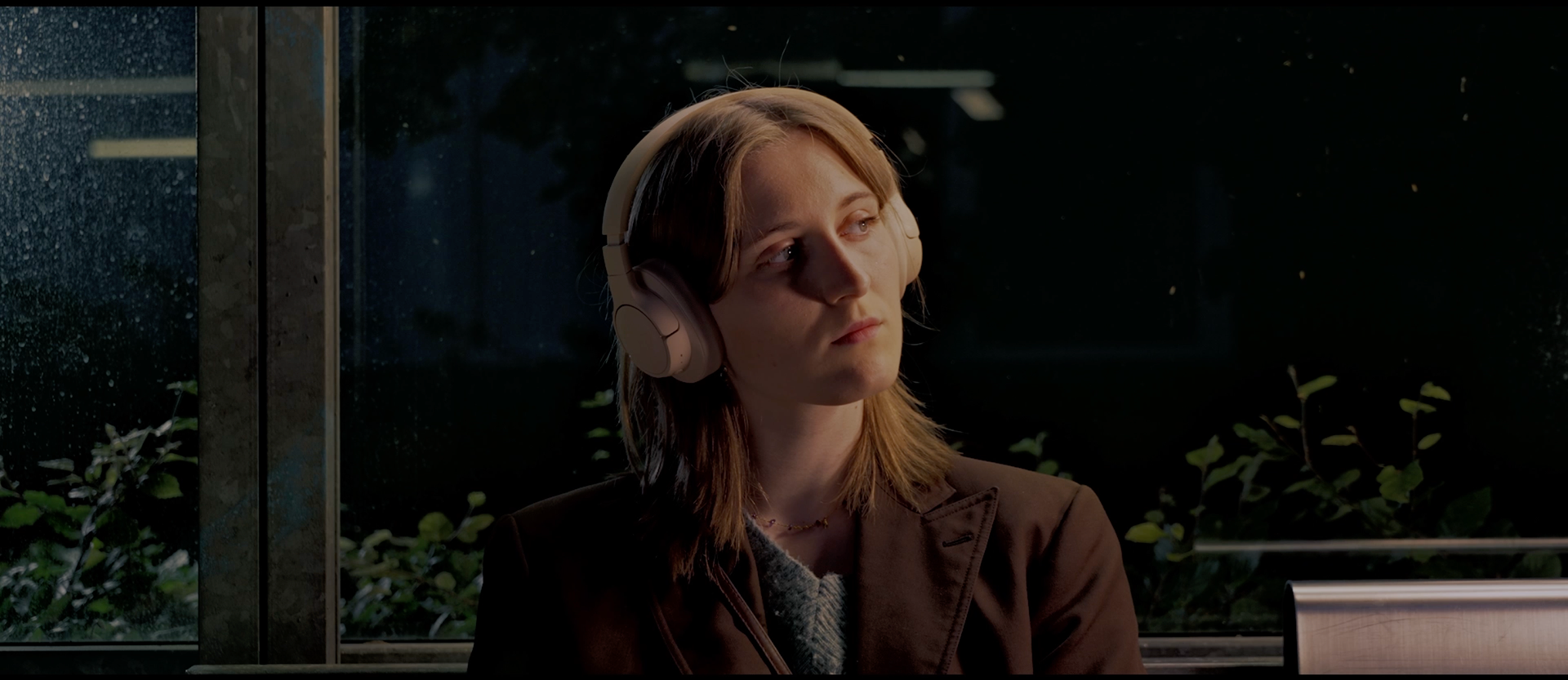
Used practical lighting to emphasise the ambient lighting of the train station. Added background light to create an interested, dynamic image.
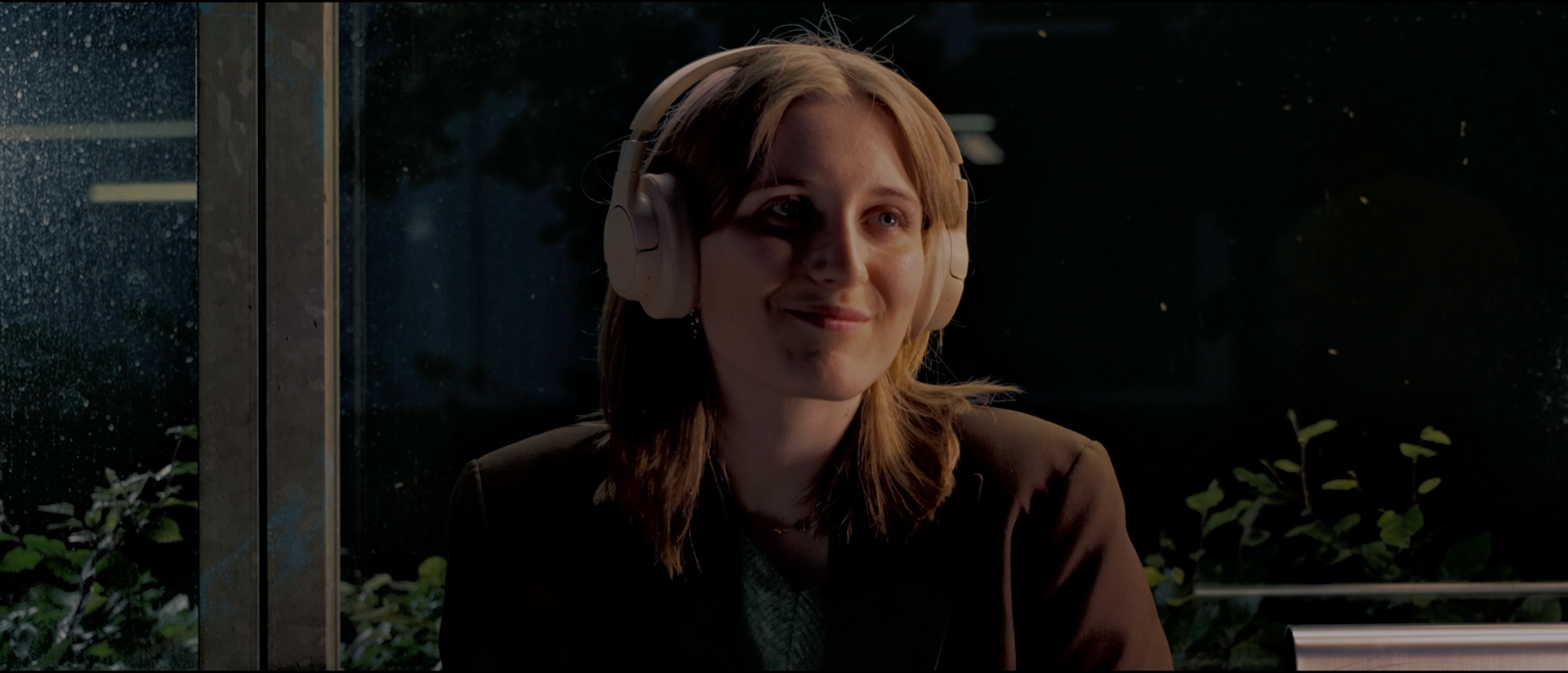
half in the dark and half in the light - made the character feel unbalanced and unpredictable to emphasise suspense and build up an unnerving quality that is reinforced by the audio
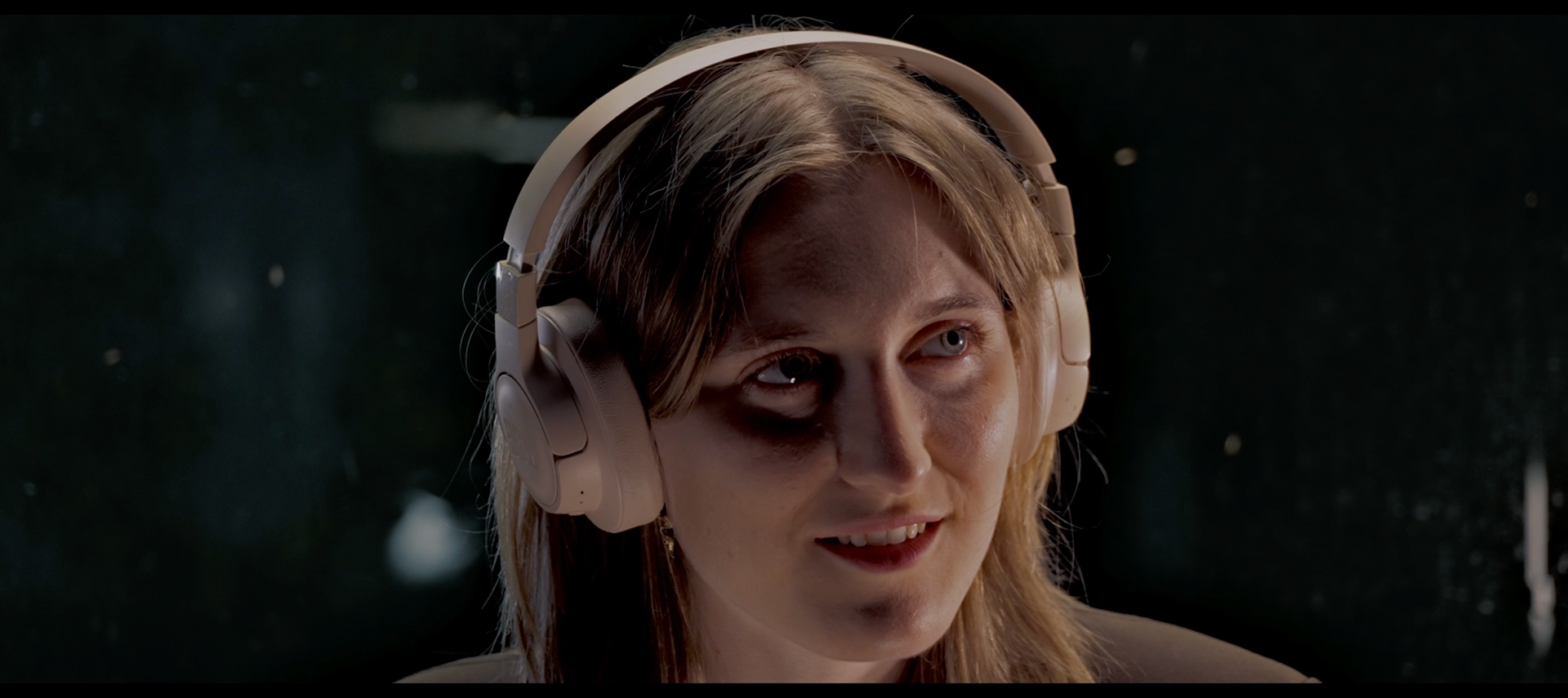
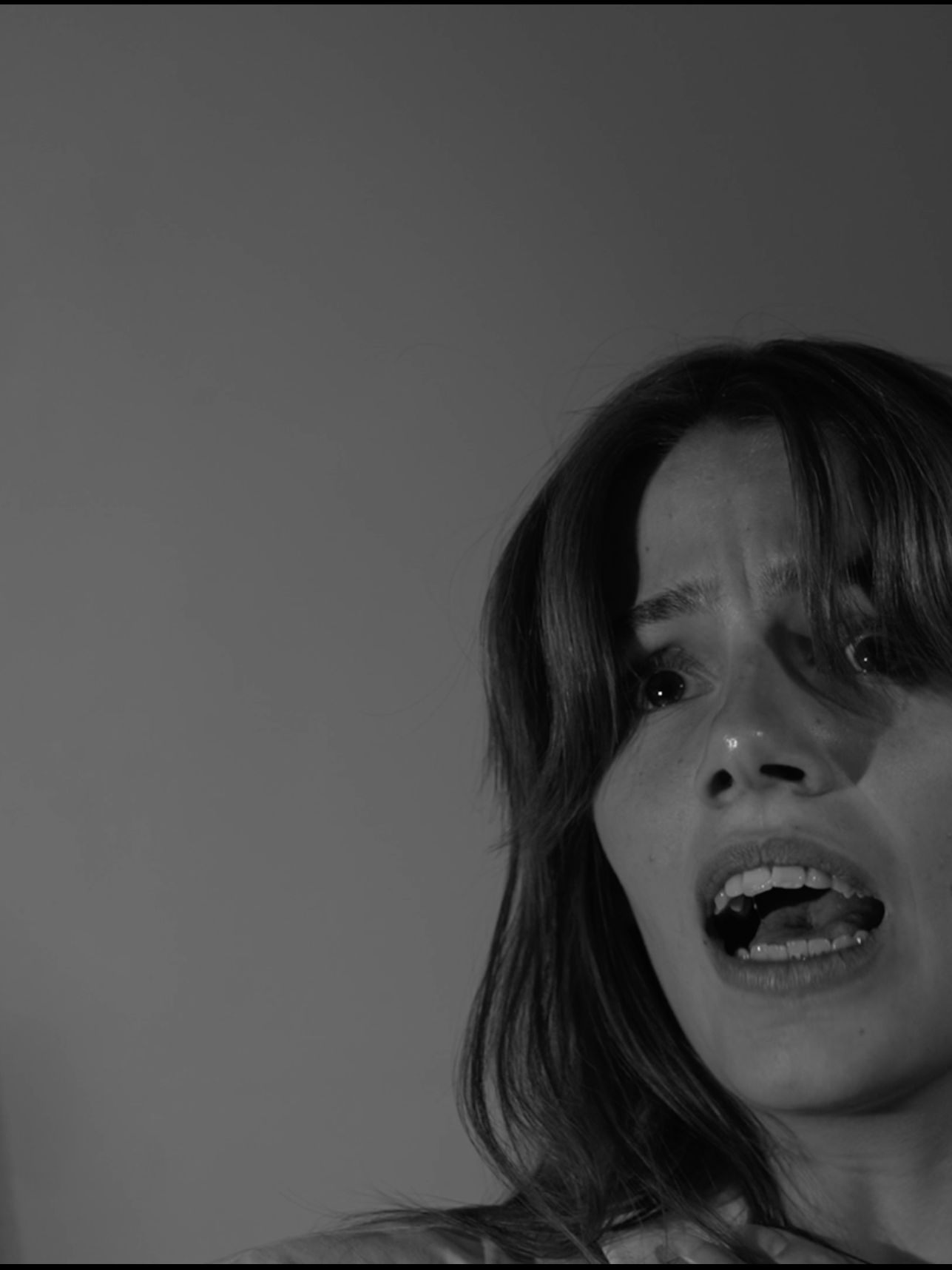
Light helped to build a high-contrast image which emphasises the creepiness of the acting
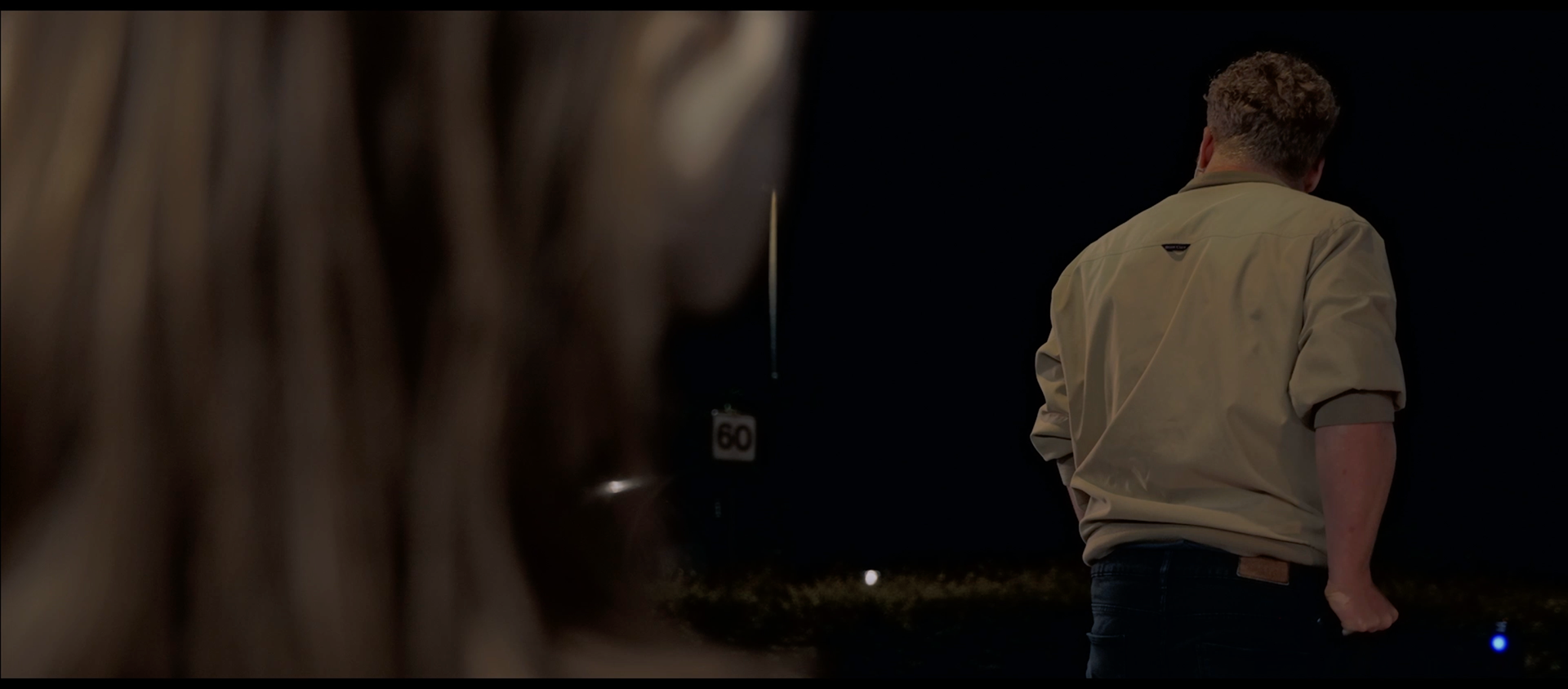
This was a fun shot to light - using the ambient lighting to light both figures at once was a funny but successful challenge.
My other roles...
Rough-cut editor (post-production)
I was responsible for the rough-cut edit. Following the pre-approved shot list, I placed the shots in order and selected the best ones for acting and continuity. Through this, I learnt the importance of continuity and how to select the best shots for the final cut.
The producer kept note of the best shots during production in order to aid the rough-cut edit.
Podcast Scriptwriter (throughout production)
Writing the podcast voice-over began as a joint effort, with all team members throwing ideas of creepy things that could be said. Following this brainstorming, I refined these ideas into a narrative, ensuring to play up the creepiness by leaning on the normality of cooking and pushing it to an extreme degree. In doing this, I pinned down the playful yet creepy British voice that we envisioned, allowing the podcast to take on a personality of its own...
This process began during pre-production and continued in post-production until the podcast recording wrapped. After this, I helped to ensure the podcast narrative flowed as it was integrated into the final edit.
Inspiration: Poppy Adams from Kingsman: The Golden Circle.
Podcast recorder/voice director (post-production)
I oversaw the re-recordings of the podcast voice-over during post-production. During this, I listened back to the previous ones, discussed with the voice actor what worked and offered different prompts to open up other variations for the sound edit.
Allowing the actor this time to feel comfortable with being vulnerable outside of her comfort-zone taught me the value of providing a comfortable, encouraging environment - the result of this was the actor feeling more confident as the recording session went on, with the majority of the takes used in the final film coming from the latter half of this final session.
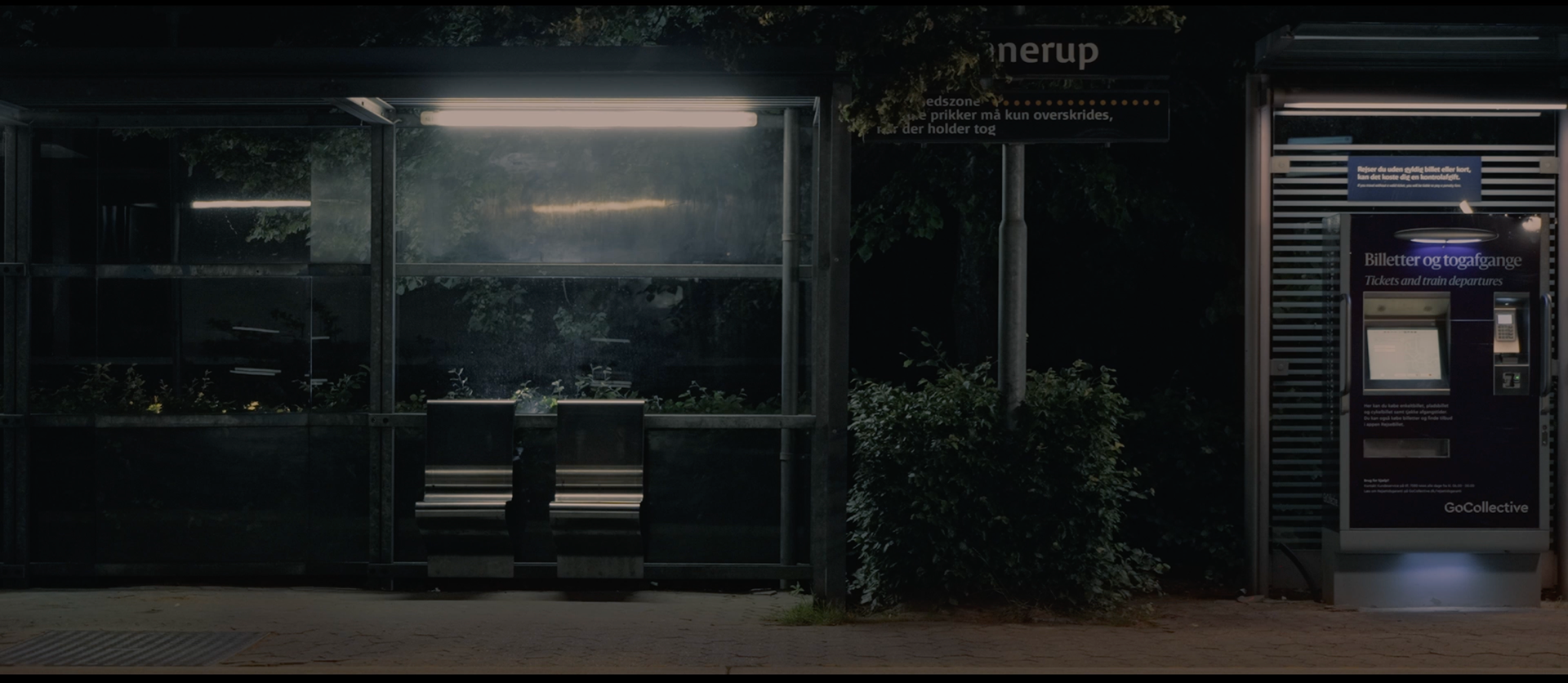
Our master shot - the careful composition of this ensured we maintained a visually interest image and eliminated any dead space. Lighting this scene without having equipment in frame was a fun challenge.
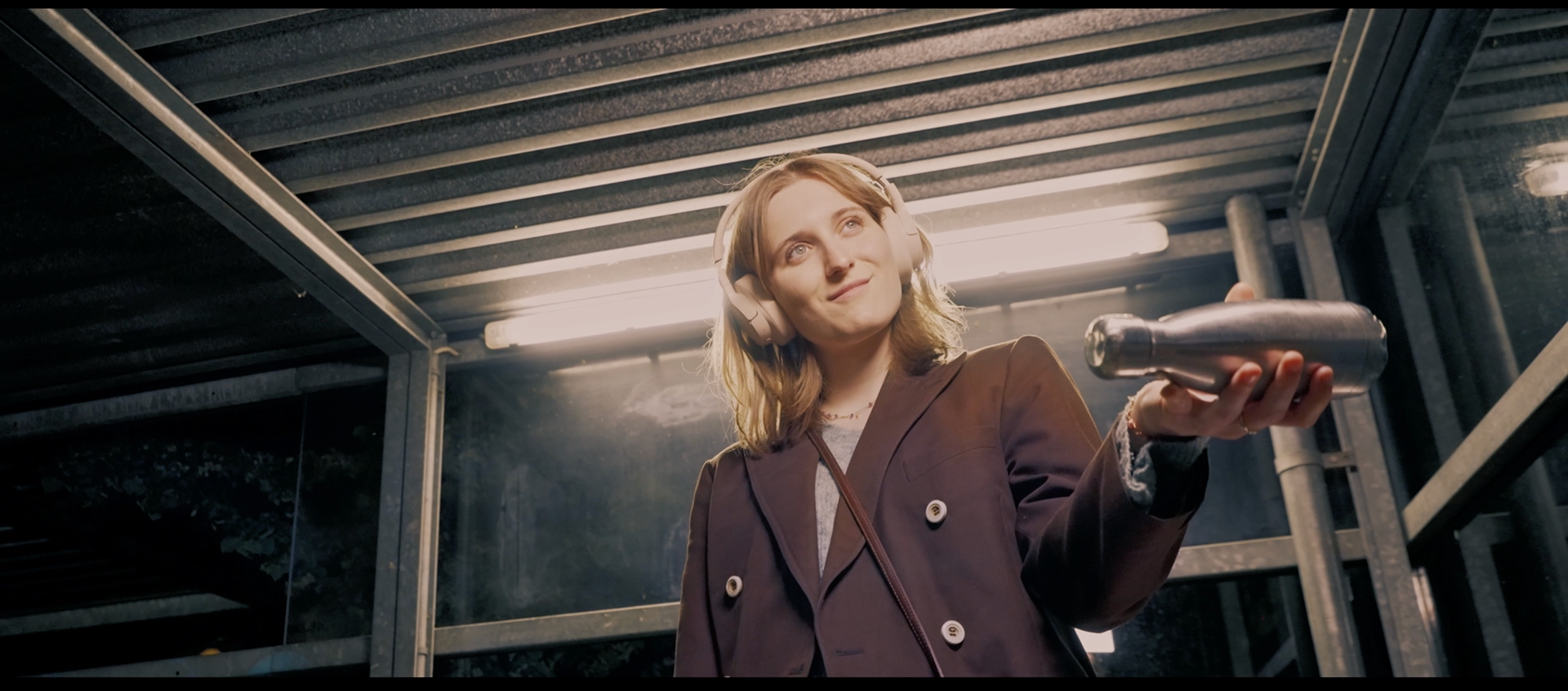
The reflective material of the water bottle worked to emphasise the uncanny lighting of this shot
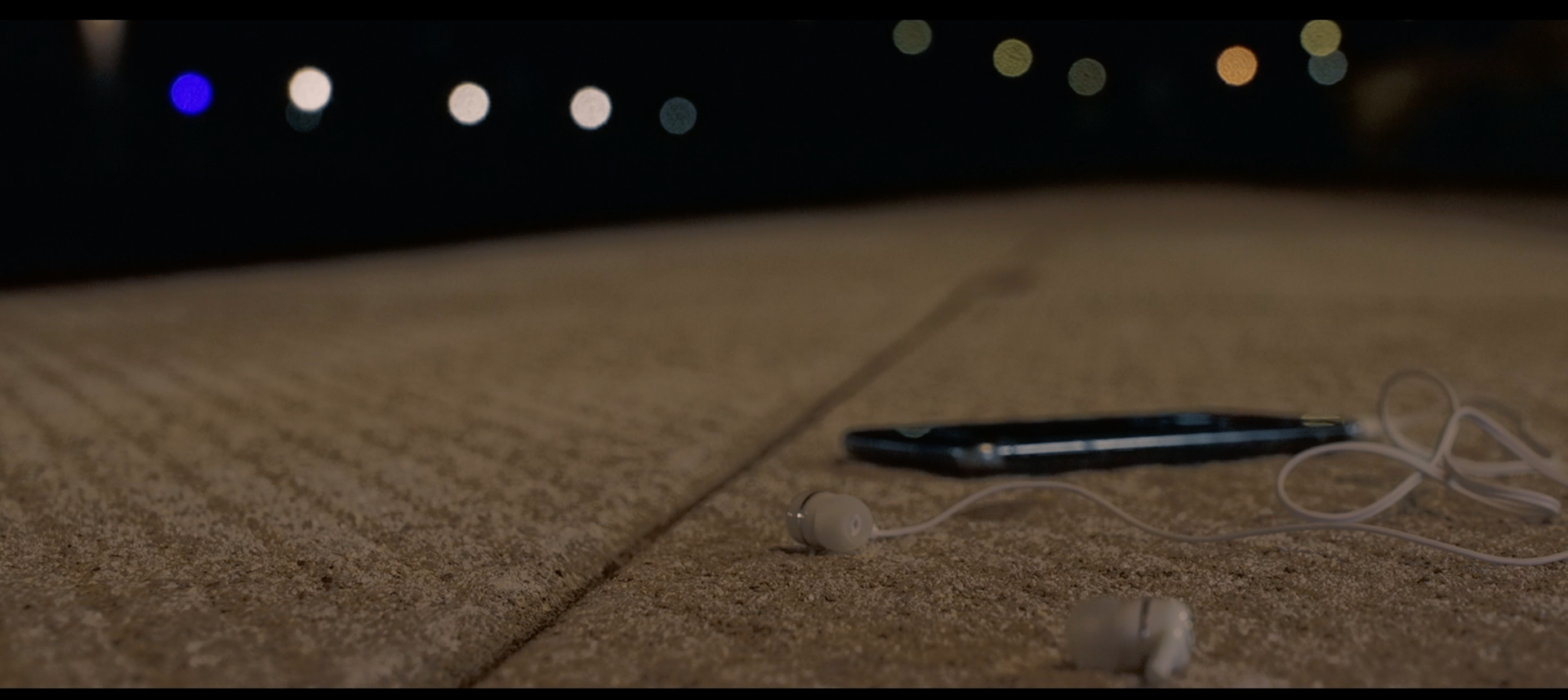
This final shot was selected to reinforce the final disappearance and leave the viewer questioning...
Final reflections:
This is where I knew that working on a set, surrounded by creative and brilliant people, is exactly where my career aspirations lie. Film is the end goal. No matter where I am, or when in the day, or how much coffee I need to keep me awake, the one place in the world I want to be is on set, working on something together with other people.