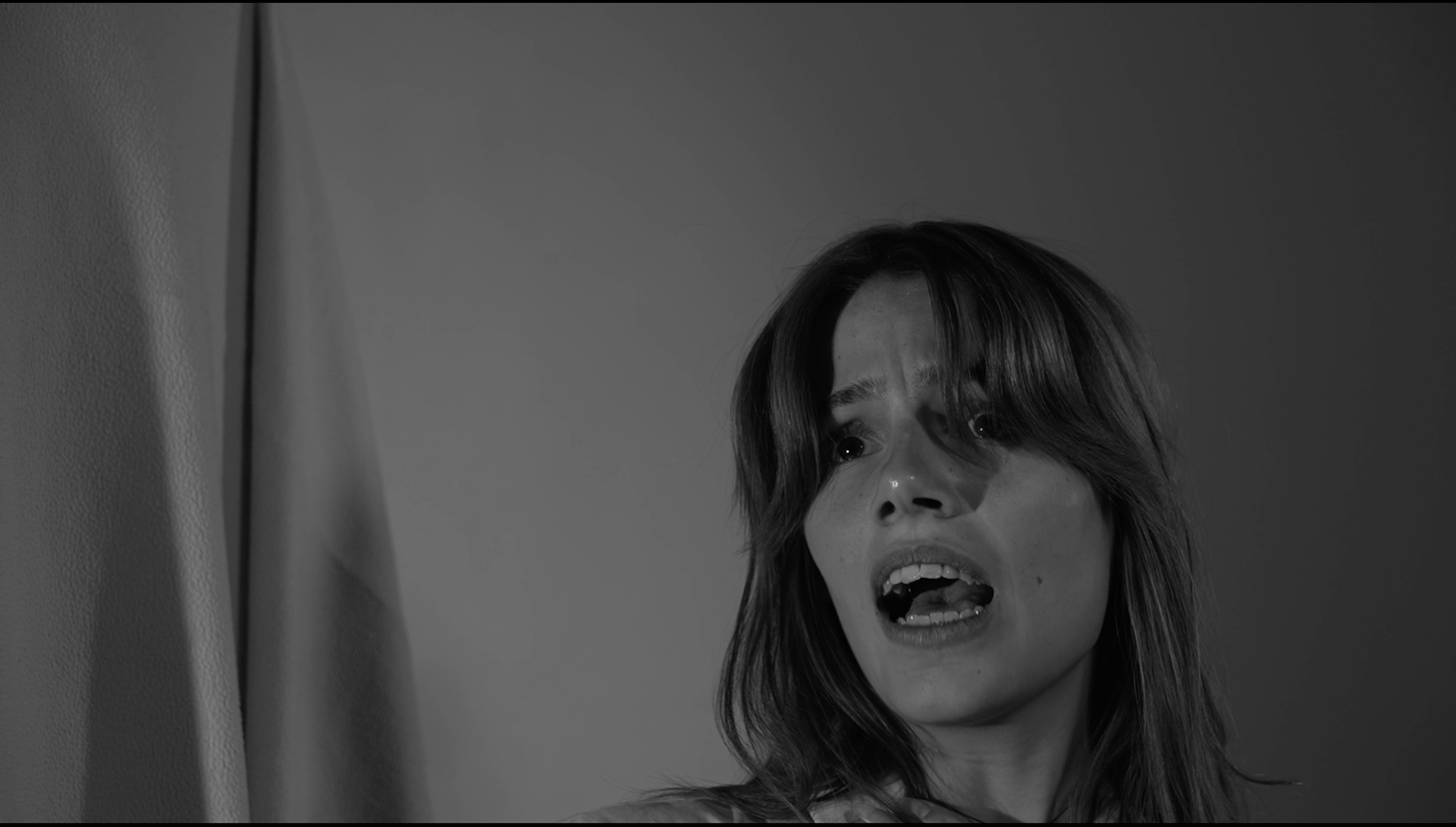
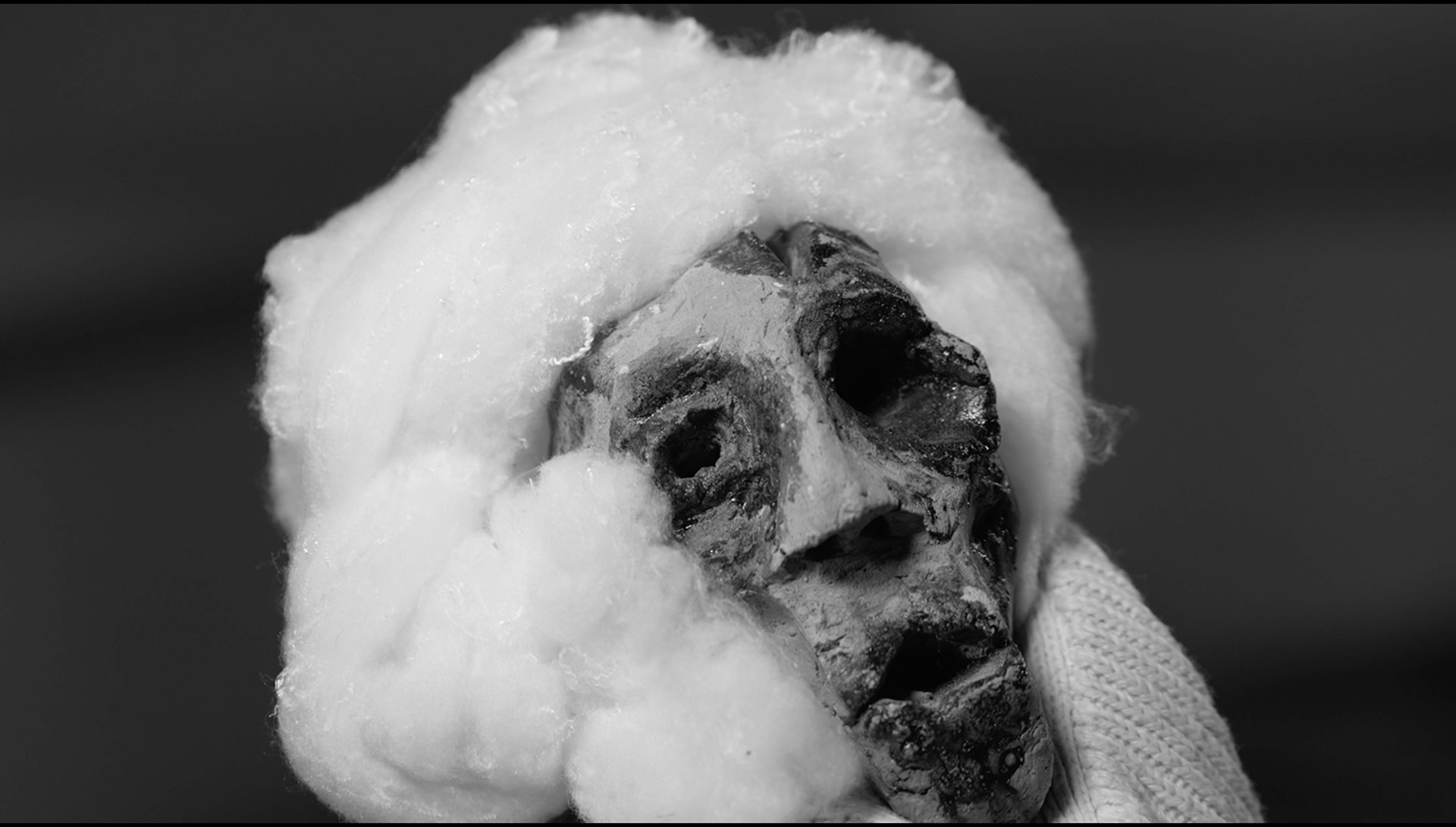
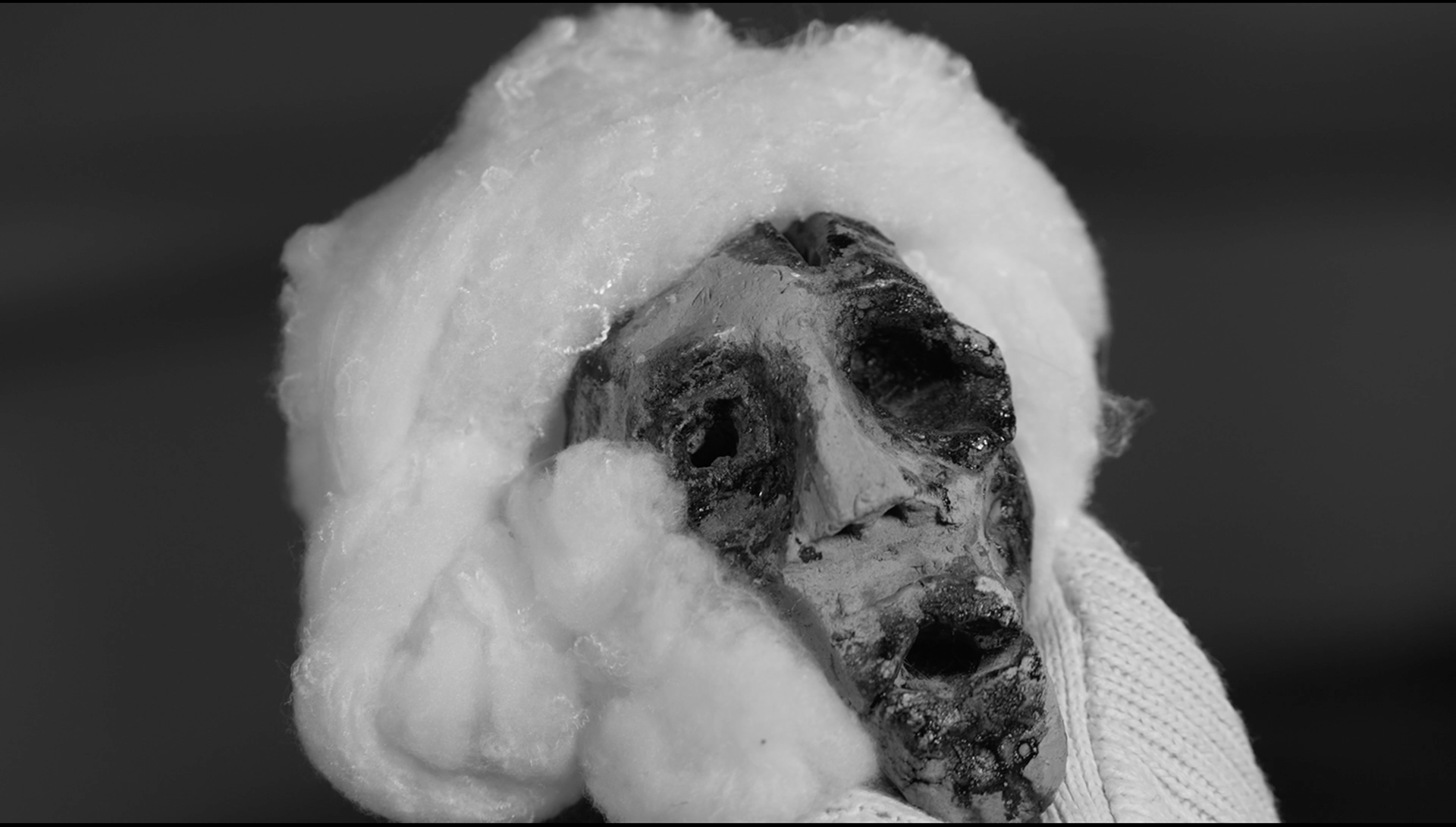
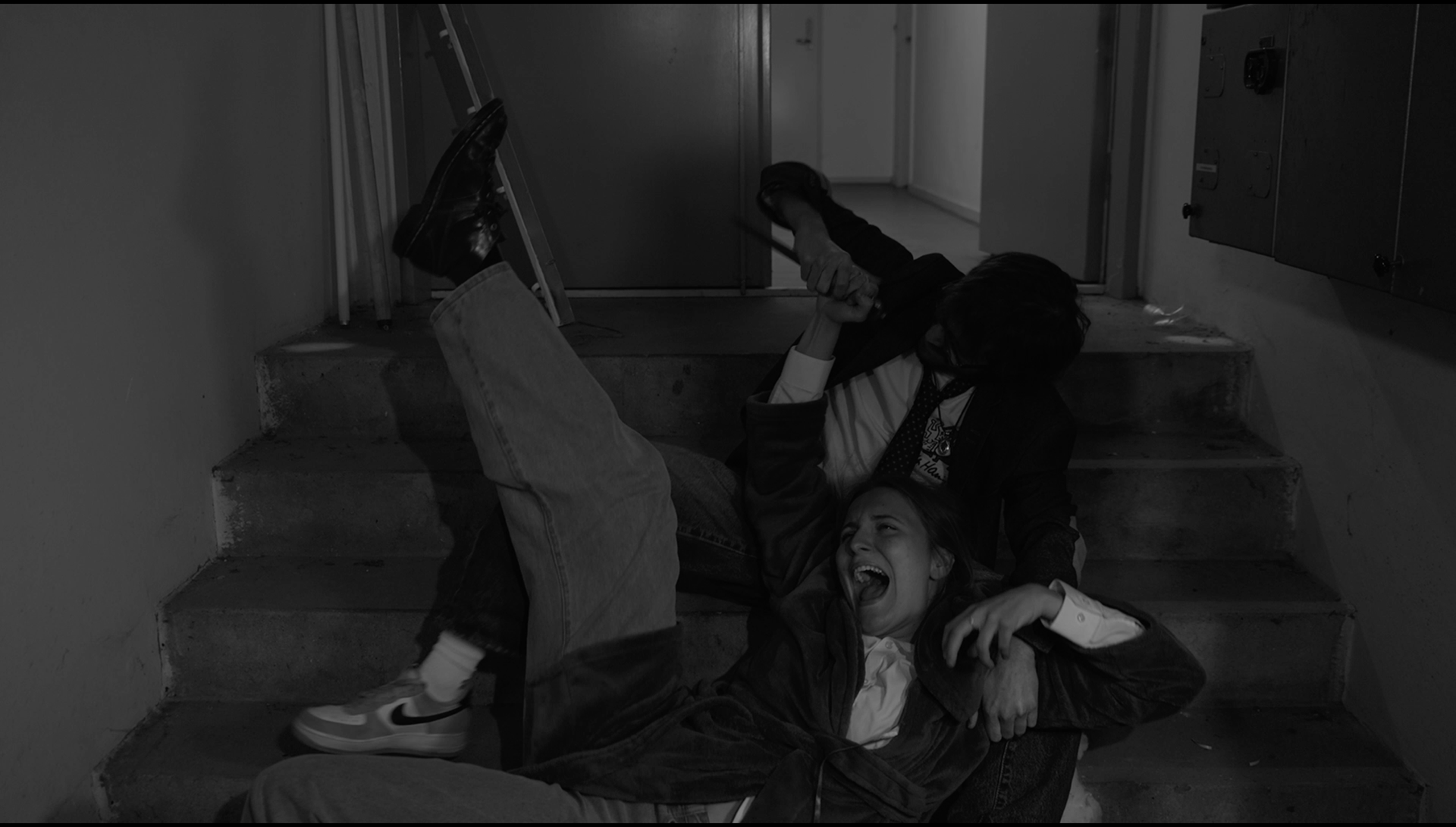
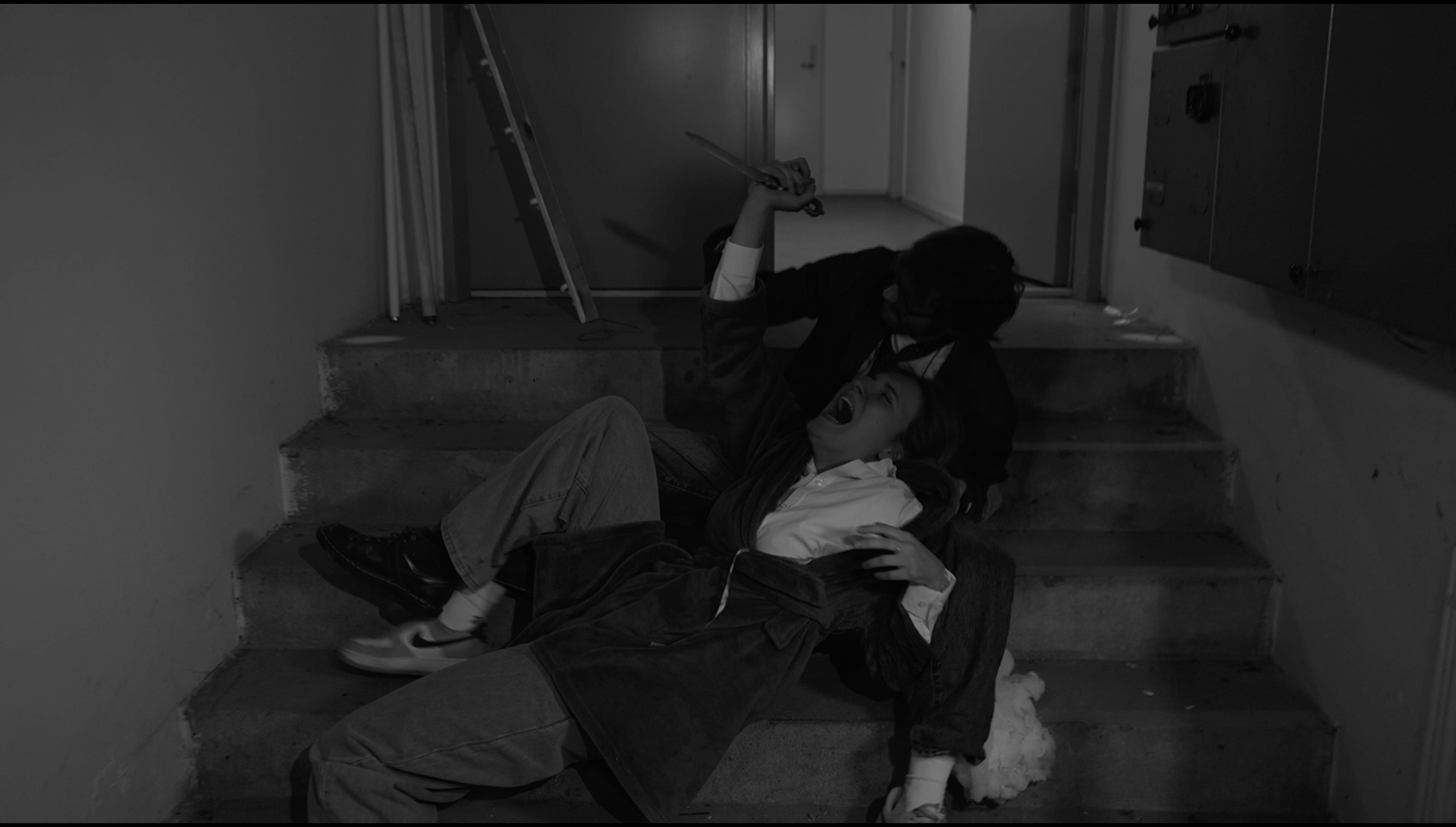
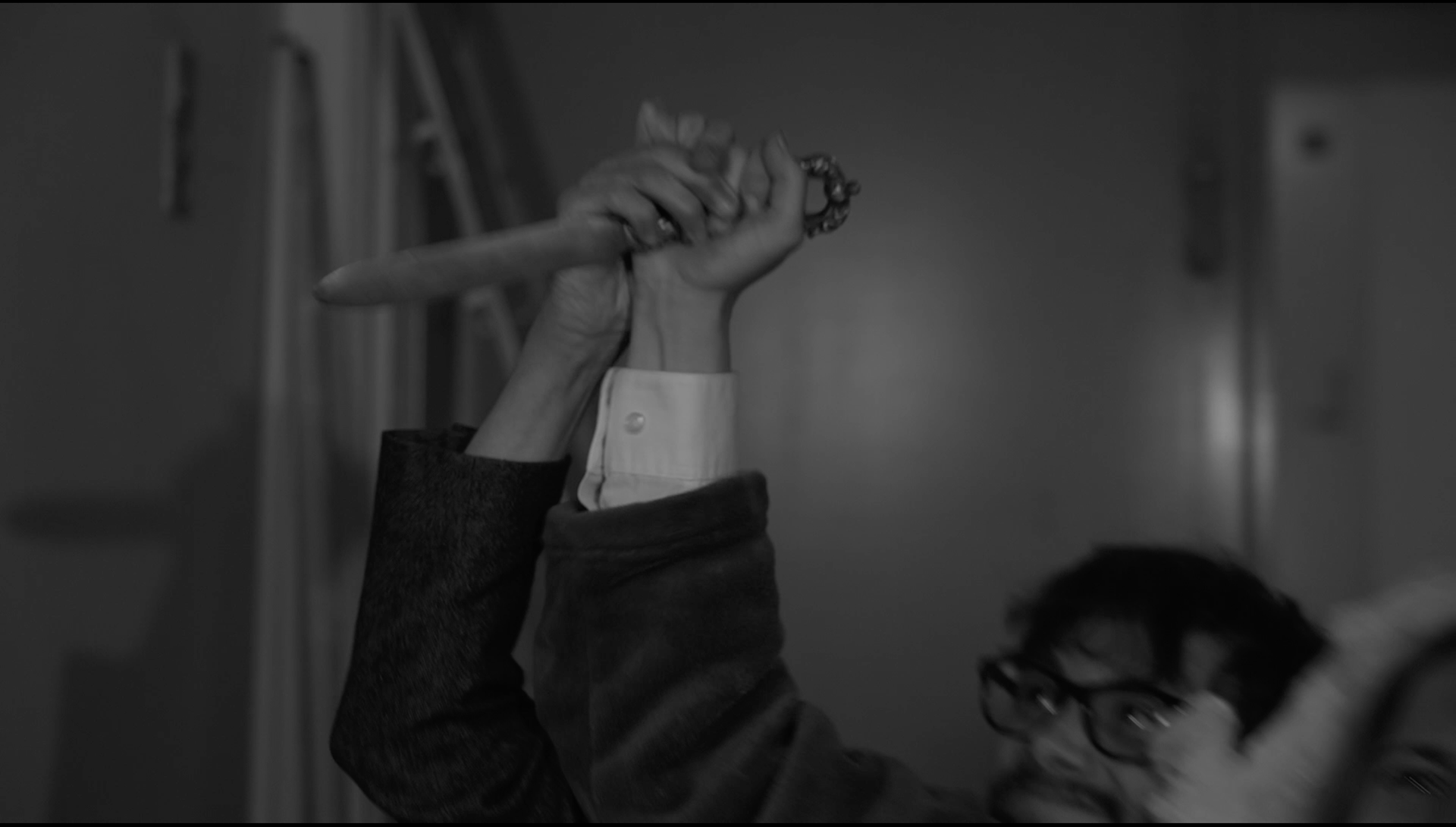
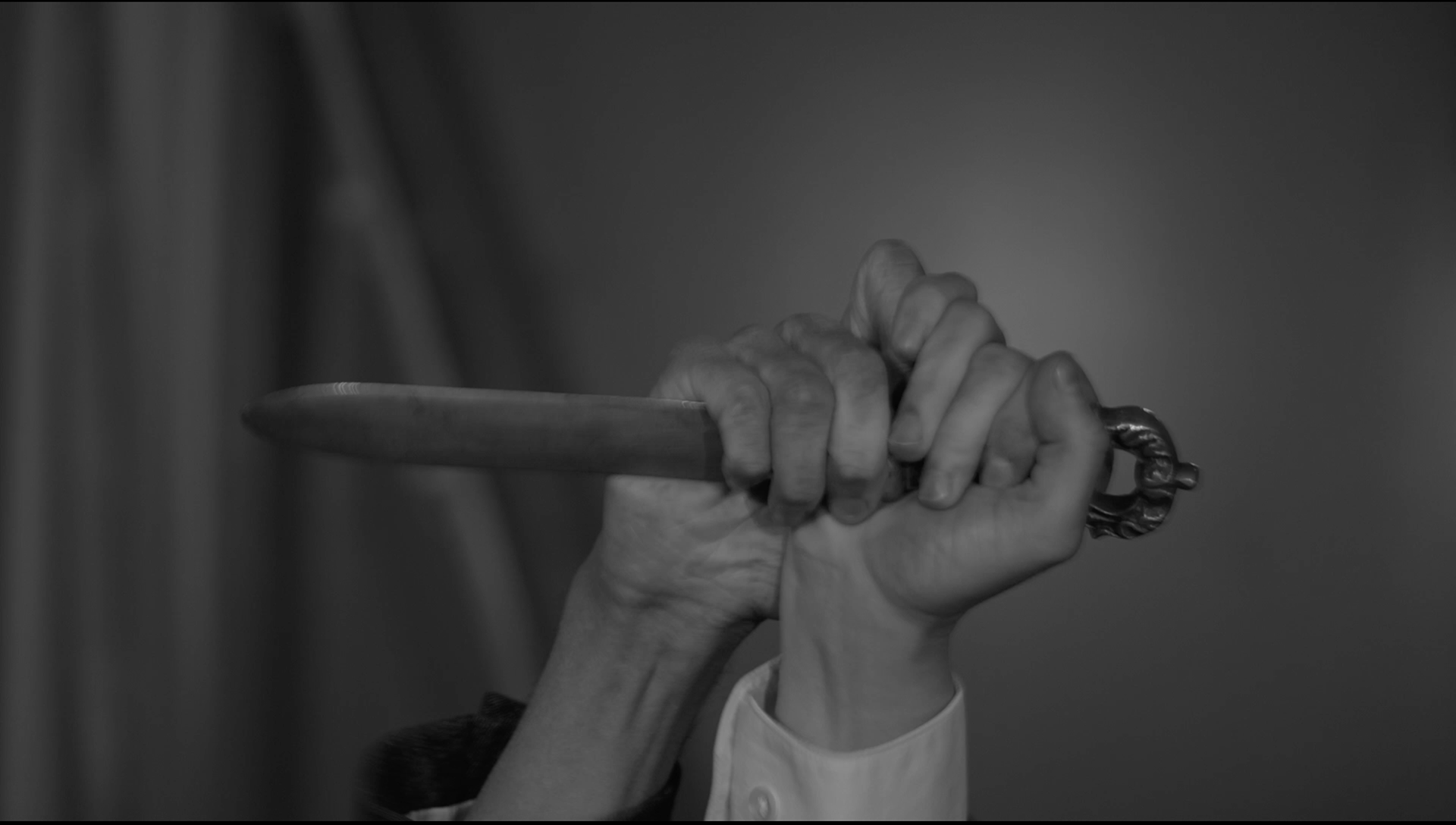
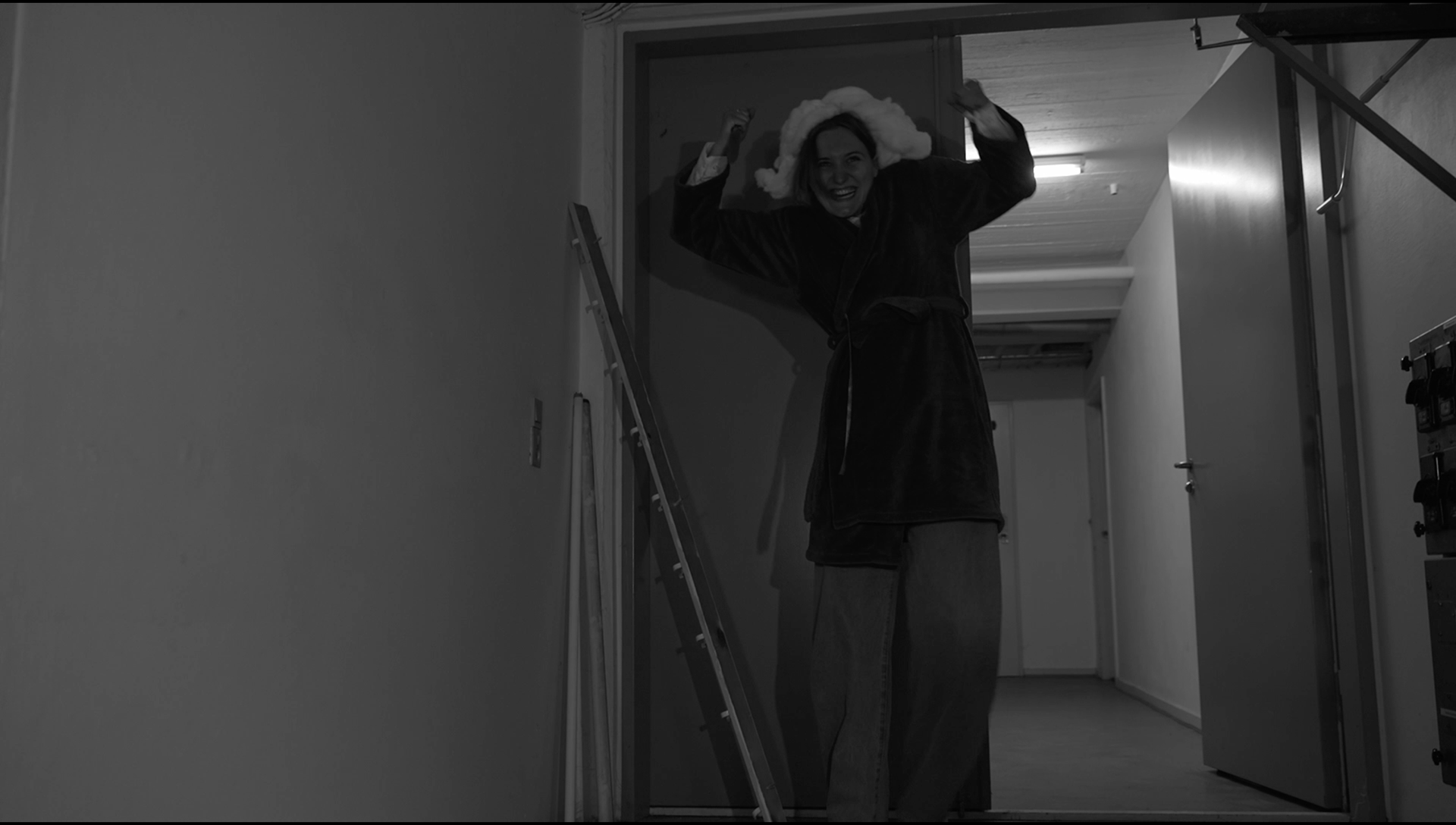
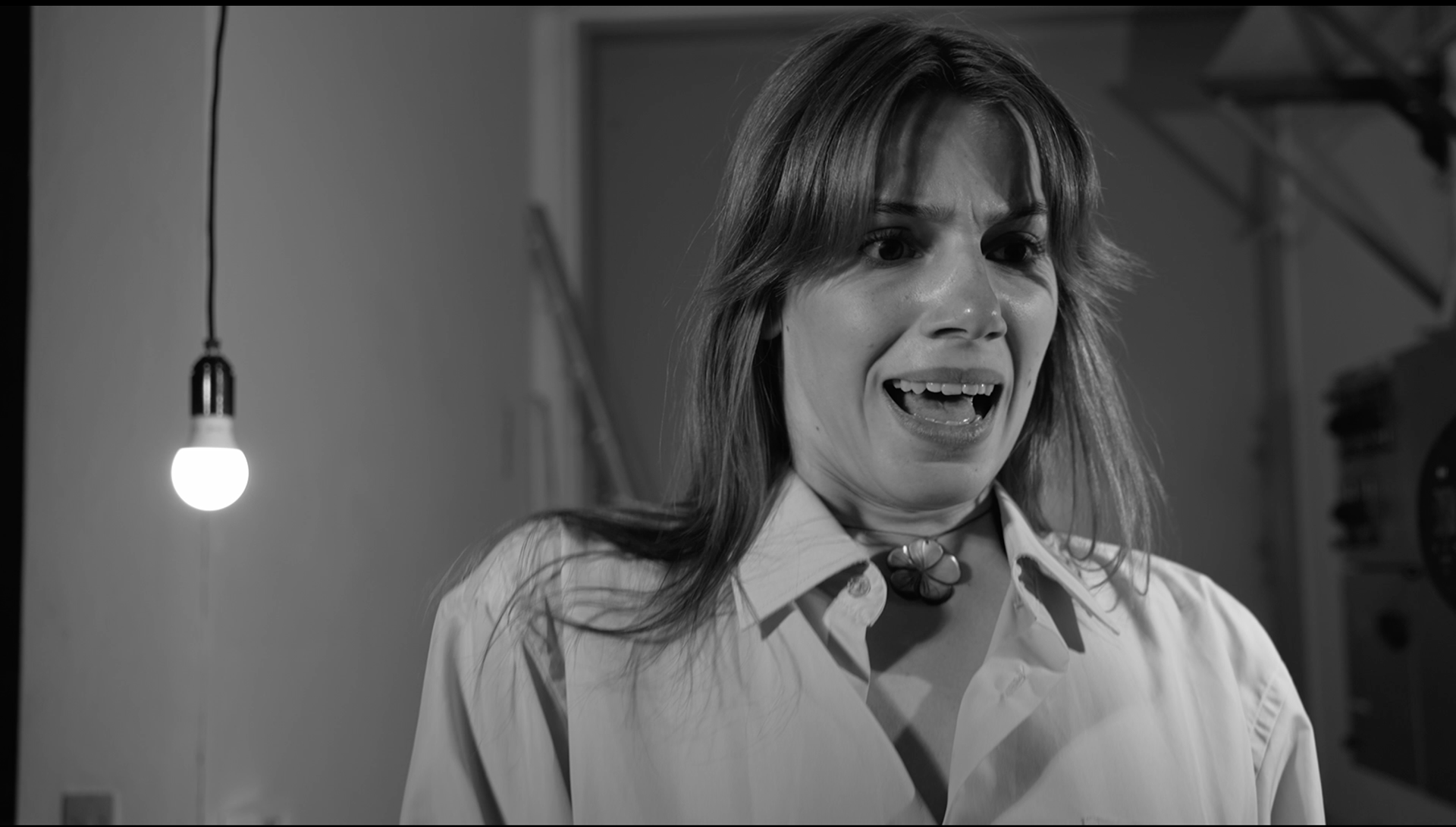
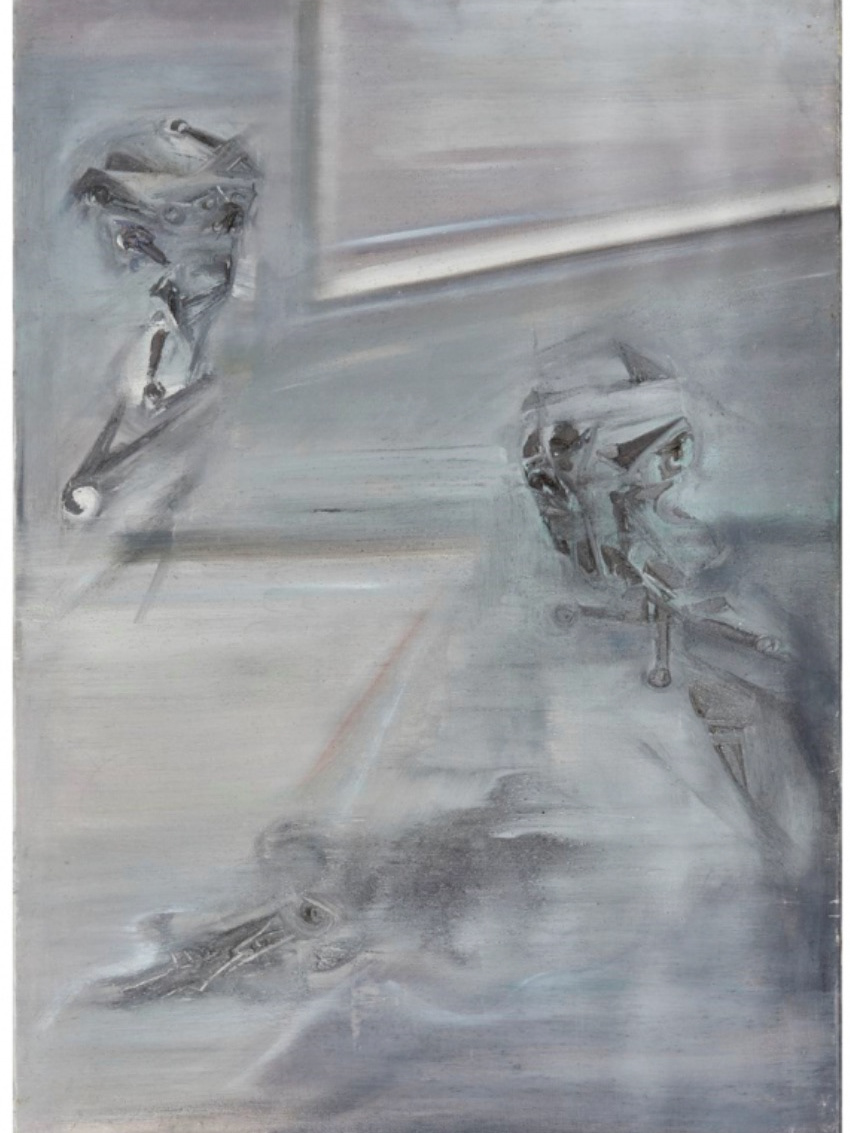
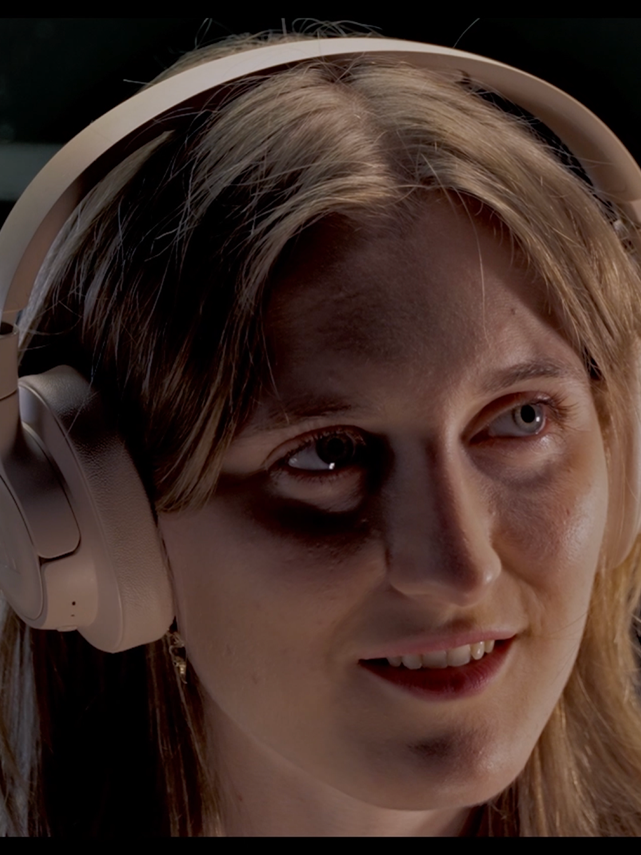
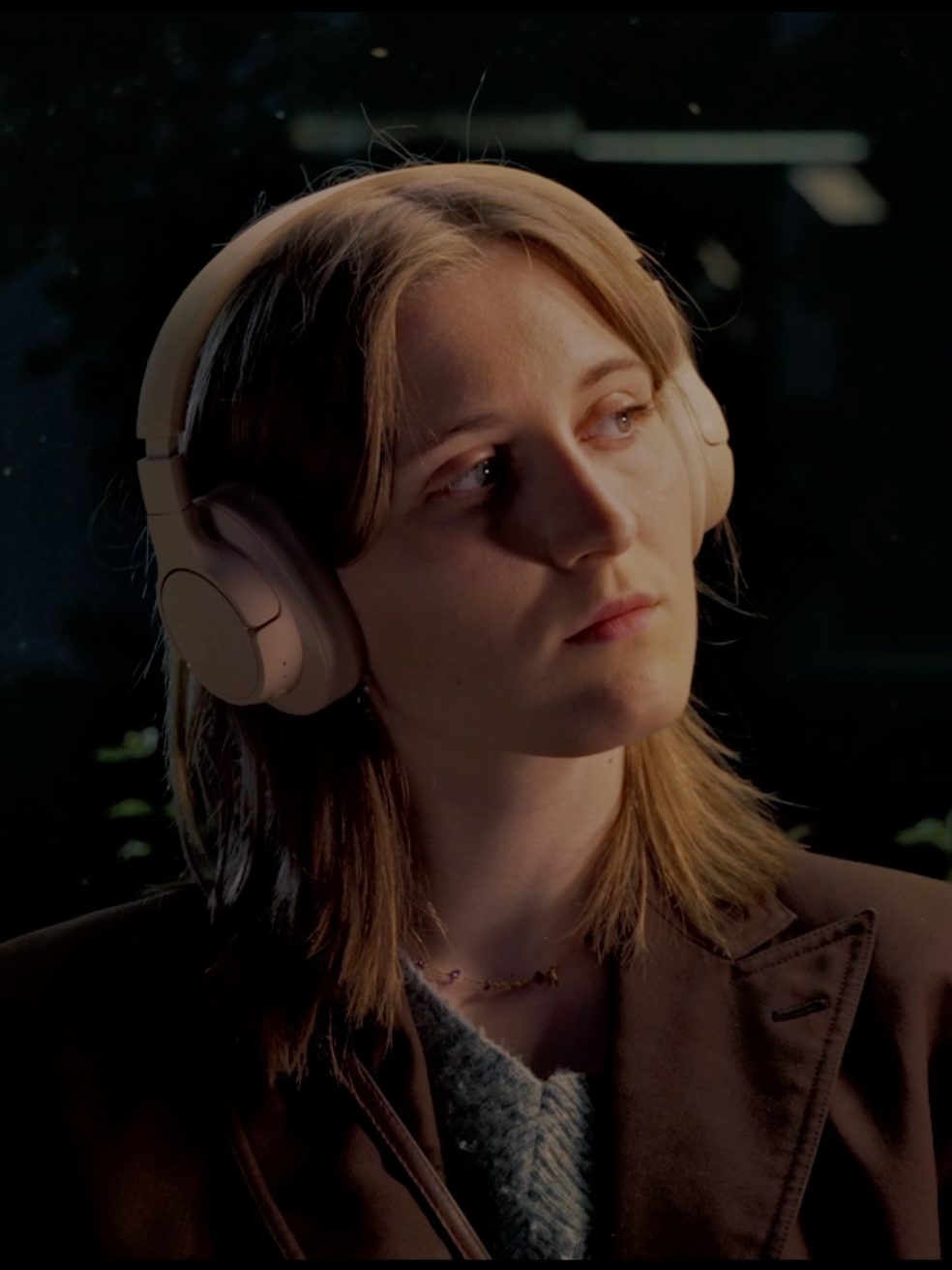
Relevance to directing: By recreating Hitchcock's shots scene-for-scene, i was able to learn a lot about how much intentionality goes into each shot. I learnt about how dynamic lighting impacts mood, how the quick editing communicates the frantic atmosphere, and how Hitchcock sought to develop the scene through a collection of visual images and sounds layered together, rather than through one continuous take with realistic audio only.
Experienced production from start to finish, working to a tight deadline.
The purpose of the recreation:
To get to grips with camera, lighting and sound equipment, and our production roles, we were tasked to recreate this iconic scene from Hitchcock's PYSCHO.
This allowed me to experience working on set with the team and gave me a space me to experiment with lighting and make lots of amateur mistakes.
The idea here was shooting this 'practice' film provided the opportunity to learn what works and what doesn't.
The ethos: only by making amateur mistakes ourselves can we learn from them.
What I learnt...
1. Practical experience: How to set-up and position lighting. How different intensities and placements can create differing tones. How creating high-contrast images works to build up the horror element of the film. Playing with light impacts the viewers watching experience, leaving them on edge and bringing dynamic shots to otherwise static scenes.
The swinging light: this taught me how playing with light can bring dynamic and visually-unsettling images to otherwise static shots. This was a challenge to get right, but rewarding to see how light can be used to create mood.
2. Theoretical knowledge: By jumping straight onto set, I quickly learnt what I didn't know and what I needed to learn ready for the production of our following film 1AM WAITING. If it wasn't for this experience, I may not have known what theory would be useful to study, which may have impacted my adaptability on our future set.
3. The importance of Pre-Production: For this recreation, we jumped straight onto set, trialling ideas for scenes as we went. This took a significant amount of time and lengthened our shoot time by hours. Learning from this experience, we placed emphasis on a comprehensive pre-production for our short film 1 AM WAITING, ensuring that we showed up to set fully prepared, mitigating hours of trial-and-error that come have come from being unprepared.
4. The edit... pacing: By editing this recreation shot-for-shot, I was able to gain a very good understanding of pacing. Working through Hitchcock's shots and the way which he pieced them together, and the moments that he chose to cut, developed my understanding of how to build suspense visually with a short sequence. This led onto my rough-cut edit of 1 AM WAITING, as my sense of pacing was strengthened by the detail I applied in the rough-cut edit of this scene.
5. Foley sounds: This recreation taught me the power of sound in building atmosphere, especially in horror films. For this production, we tasked ourselves to create as many foley sounds as possible to mirror those used in the original film... this even included the distorted and disembodied screaming which appears in the original. Noticing how these screams were kept in the original film, also taught us about how a film's tone can often be more important than ensuring it is entirely logical.